
Falling Waters, Spring Mills, Inwood
Trees on New-Build Lots in Falling Waters, Spring Mills and Inwood, WV
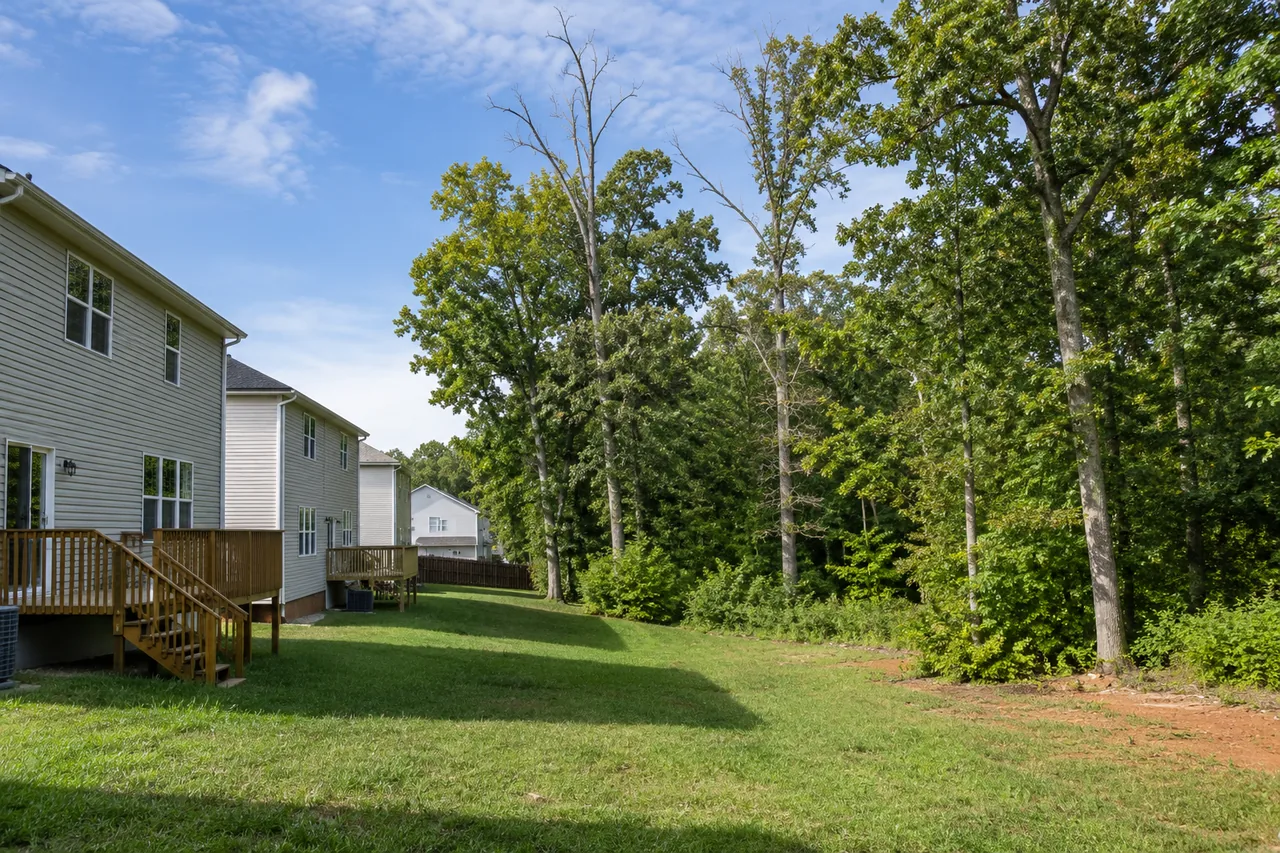
The short answer
On a newer lot in Falling Waters, Spring Mills or Inwood, the trees that cause trouble are usually the ones left standing at the edge of the clearing: tall oaks, poplars and walnuts that lost part of their root systems when the lot was graded, and that start dying back a few years after the house went up. One independent local contractor can look at those edge trees, say which are sound, and take down the ones that threaten the house.
The growth is real. Berkeley County went from 122,076 people in 2020 to an estimated 139,522 in July 2025, up 14.3%, and 76.0% of its homes are owner-occupied (Census QuickFacts, checked Nov 28, 2026).
How fast are these places growing?
| Place | 2010 | 2020 | Change |
|---|---|---|---|
| Falling Waters (census-designated place) | 876 | 1,440 | +64% |
| Inwood (census-designated place) | 2,954 | 3,426 | +16% |
| Martinsburg (city) | 17,206 | 18,739 | +9% |
| Berkeley County | 104,169 | 122,075 | +17% |
Spring Mills isn't counted as its own census place. It's an unincorporated community on WV 901 and US 11, about 7.2 miles north of Martinsburg, with a Spring Mills Historic District listed on the National Register in 2004 and a full set of schools through Spring Mills High School (Wikipedia). In February 2026 Potomac Edison announced a $6.6 million substation, finished the December before, near that high school to serve about 2,400 homes and businesses in the Falling Waters and Spring Mills area, saying "Berkeley County is growing fast" (FirstEnergy, Feb. 18, 2026).
The county's median owner-occupied home value is $266,300 and the average commute is 30.7 minutes (Census QuickFacts, 2020 to 2024 survey figures).
Why do edge trees die after a house goes in?
A big tree's roots spread well past its branches, mostly in the top foot or two of soil. Clearing a lot, cutting a driveway, trenching for water, sewer and power lines, and running heavy equipment across the root zone all cut or crush those roots. Grading that adds even a few inches of fill smothers them. The tree doesn't fall over the next day. It leafs out thinner each year, drops dead limbs and, several years later, may die outright or fail in a storm.
Martinsburg's own landscaping standard recognizes this: a preserved tree on a development has to keep at least two-thirds of its drip line clear of land disturbance to count toward the planting requirement (City Code §1307.12, Ord. 2022-13, passed Nov. 10, 2022). Outside the city, no county tree-preservation rule turned up in the ordinances read for this guide.
What signs should you look for?
- bare branch tips at the top of the crown, especially on the side facing the house;
- small, pale leaves, or leaves turning early in late summer;
- sprouts along the trunk;
- bark falling off, mushrooms at the base, or soil cracking and lifting on the side away from the lean;
- a tree that was in the middle of a woods and now stands alone at the edge, taking wind it never had to before.
That last one matters. Trees grown in a stand lean on each other. Once the lot is cleared, the survivors at the edge catch the full force of storms like the April 19, 2025 squall line, which brought tree damage into Spring Mills (NWS Sterling).
Is the tree yours, the neighbor's or the HOA's?
On a subdivision plat, the wooded strip behind your lot may be part of your lot, part of the neighbor's, or common area owned by the homeowners association. Some plats also show buffers, drainage easements or sinkhole buffers. Before a tree at the edge comes down, check the plat and the deed, and if the trees are in a common area, the HOA decides and usually pays. Covenants can also require approval to remove trees even on your own lot. Neither the city nor the county enforces those private rules, but the association can.
Which county rules apply on a new lot?
- Site plan over 5,000 square feet. "A site plan is needed for any project that intends to disturb more than 5,000 square feet of area" (Berkeley County Planning, checked Nov 28, 2026). Clearing more woods behind the house for a pool, a garage or a bigger yard can cross that line once stumps and roots come out and the ground is graded.
- Stormwater. The county stormwater ordinance covers land disturbance of an acre or more and certain projects creating 5,000 square feet of impervious cover (Art. I.E(2), as amended 2023).
- Sinkholes. New construction stays 50 feet from unrepaired sinkholes, with a subsurface study within 100 feet (SALDO §404.5, amended Jan. 30, 2025). See karst and sinkholes.
- Inside the city. Clearing to build needs a Land Disturbance Permit, new streets get a tree every 50 feet on both sides, and planting needs the Shade Tree Commission's written approval (tree rules).
What should go back in?
A replacement tree under or near the wires should be small. FirstEnergy's planting guidance: trees within 20 feet of neighborhood lines should mature at 25 feet or less, trees 20 to 50 feet away at 40 feet or less, and taller kinds at least 50 feet from residential overhead lines (FirstEnergy). Skip the Callery pear, which the state rates threat level 1, "highly invasive" (invasive trees). Many subdivisions bury their lines, so look before you plant; and call WV811 before you dig the planting hole.
Common questions
The builder left a big oak 15 feet from the house. Should it go?
Not automatically. It depends on how much root was cut, how the tree looks now, and what it would hit. Have it looked at before it shows decline, and again a couple of years later.
Can I clear the woods behind my lot?
Only if it's your land and the plat and covenants allow it. Taking trees out is "clearing"; pulling stumps and grading a big area is land disturbance and can need a county site plan.
Who handles trees in the common area?
The homeowners association, usually through its management company.
Have a tree like this?
One independent local contractor who works the Martinsburg area can come out, look it over and put a price on it.
Call (681) 248-5434 Or write it up on the request form